
Builders, developers and property managers
Builder & Commercial Hydroseeding in Salt Lake City, UT
Acre-scale seeding and final stabilization so graded ground can be closed out.
- Free site visits with a written estimate
- Seed mixes chosen for your soil, sun and water
- Seeding scheduled around Salt Lake's spring and late-summer windows
Covering Ground by the Acre
Builder & commercial hydroseeding covers the large, open ground that construction leaves behind in and around Salt Lake City: subdivision lots and common areas, detention and retention basins, road shoulders and utility corridors, commercial landscapes, school and park fields, and the leftover pads of finished phases. Among hydroseeding companies working the valley, the difference that matters on these jobs is not the sprayer but the planning: matching the seed and mulch to how the area will be used, sequencing with grading crews, and meeting the stabilization requirements in the site's stormwater plan.
Why builders use hydroseed
A tank truck can cover a lot of acreage in a day from the road or a lot edge, without dragging equipment across finished grade. The mulch layer goes down with the seed, so the soil is covered immediately rather than days later. And the same equipment can apply a heavier hydromulch or bonded fiber matrix on the slopes where plain straw would blow or slide off. For contractors closing out a phase, that means one mobilization instead of three.
Stormwater rules drive the schedule
The EPA's construction stormwater program requires a Clean Water Act permit for construction activity that disturbs one acre or more. Sites under an acre are covered too when they belong to a "larger common plan of development or sale" that adds up to that threshold. Those permits come with sediment controls during work and stabilization of disturbed ground afterward. Our job is to put the cover down where and when your plan calls for it, and to keep reseeding thin spots until coverage meets the plan. We work from your SWPPP, not around it.
What the valley throws at large sites
Salt Lake City's airport normals show about 15.5 inches of precipitation a year, with April the wettest month and July and August the driest. Most of the moisture comes with Pacific storms from October through May, and summer storms are scattered thunderstorms that can dump hard rain on one site and miss the next. Exposed acreage takes its worst beating in spring. Dry, windy summer days then move loose soil off any ground that is not covered, which is a dust problem as much as an erosion one.
Choosing the cover
What gets sprayed depends on what the area becomes. Lots that will be landscaped by the homeowner may only need temporary cover with a quick-establishing annual grass and mulch. Common areas and park strips that will be irrigated get a turf blend. Basins, drainage channels and non-irrigated open space usually get a native or reclamation mix that can survive the summer on natural moisture once it is established. On slopes, we raise the mulch rate or switch to bonded fiber matrix or blankets.
Working alongside other trades
We coordinate with grading, utility and landscape crews so seeding happens after the last disturbance, not before it. Irrigation lines should be in and tested where turf is planned. If a section will be dug up again for a utility or a model home, we leave it for later or give it temporary cover. Our hydroseeding services include returning to touch up tracks, washouts and thin spots so the area is ready for final inspection.
Water on site
Hydroseeding uses a lot of water, and on a raw site there may be no hookup. We plan the fill source before the job, whether that is a hydrant meter, a site tap or a nearby supply, because driving off to refill doubles the time on a large area. For turf areas, the irrigation system needs to be running before seeding; for reclamation and native areas, we time the work to the seasons when natural moisture is most likely, usually fall into spring.
Dust and fine soil
When bare soil dries out in summer, wind lifts it off open pads and lots. A temporary seed and mulch cover on idle phases is one of the cheapest ways to keep dust down and to keep the soil on the site for when it is needed. It also shows inspectors and neighbors that the open ground is being managed between construction phases.
Documentation for closeout
Inspectors and owners want to see that stabilization is done. We note seeding dates, areas covered, mixes and rates, and return visits, so your superintendent has what the stormwater plan's records call for. When reseeding is needed, it is written up the same way, and we flag areas where continued disturbance from other trades is undoing the cover.
Pricing large areas
For big open ground, consumer cost guides run from about $2,000 up to $4,900 an acre, and HomeAdvisor gives $2,600 to $8,700 for a full acre. Public bids give another reference: two hydroseeding bids North Little Rock, Arkansas received for city work in 2023 were $2,595 and $3,325 an acre. Access, slope, water source, mix and mulch rate move the price. We bid from your plans or a site walk and put it in writing. Get a free estimate
Large-Area Work We Handle
Seeding and cover for every stage of a development.
Subdivision lots and phases
Temporary or permanent cover for graded lots and open phases waiting on construction.
HOA and common areas
Turf blends for irrigated open space, entries, trails edges and park strips.
Detention and retention basins
Seed and mulch on basin floors and side slopes so they stay stable and functional.
Roadsides and utility corridors
Reclamation mixes along shoulders, trenches and easements after the work is done.
Commercial landscapes
Turf and low-water mixes around offices, retail, warehouses and schools.
Final stabilization
Seeding and reseeding until coverage meets the stormwater plan's requirement.
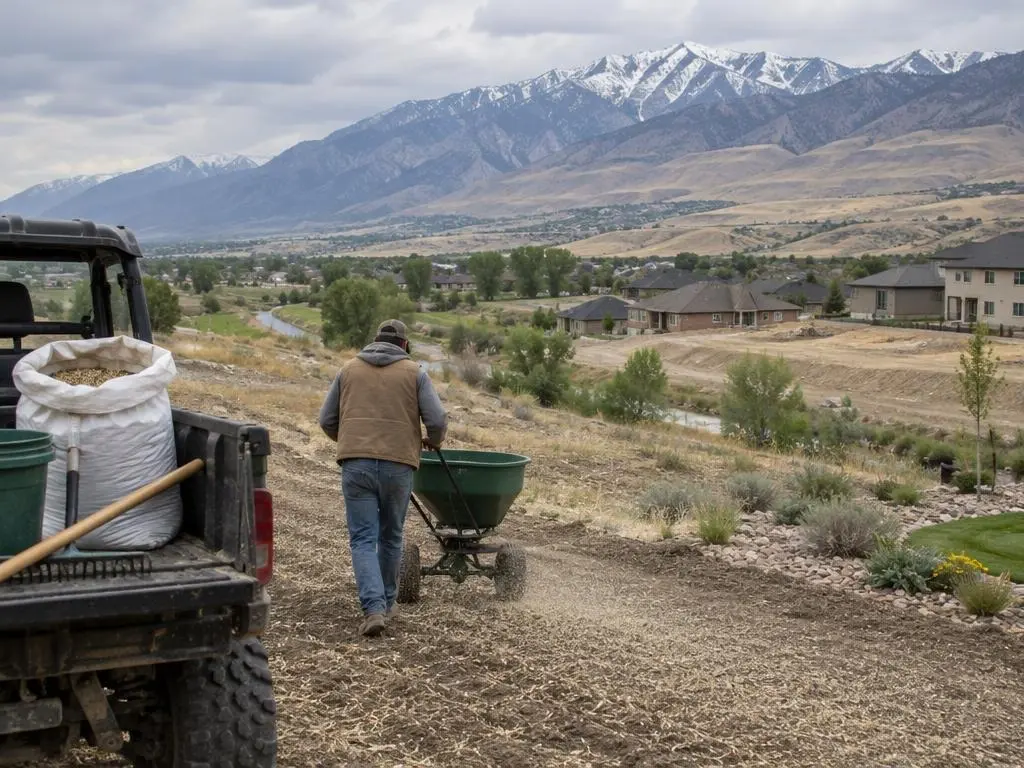
Published Large-Area Hydroseeding Prices
| Job | Published range |
|---|---|
| Hydroseeding per acre (LawnStarter) | $2,136 to $4,897 |
| Hydroseeding per acre (Fixr) | $2,000 to $4,000 |
| One acre (HomeAdvisor) | $2,600 to $8,700 |
| One acre (HomeGuide) | $5,000 to $8,500 |
| Arkansas city bids for park seeding, 2023, each per acre (North Little Rock) | $2,595 and $3,325 |
These are averages from cost guides; our written number for your site is final.
How Commercial Jobs Run
1. Plans and walk
We review grading, landscape and stormwater plans and walk the site with your super.
2. Written bid
Acreage, mix, mulch rate and slope treatments priced as separate lines.
3. Scheduling
Seeding is sequenced behind final grading, utilities and irrigation.
4. Application
Slurry sprayed from truck or hose, with heavier products on slopes and channels.
5. Touch-up and closeout
We return for thin spots and washouts until the area is ready for inspection.
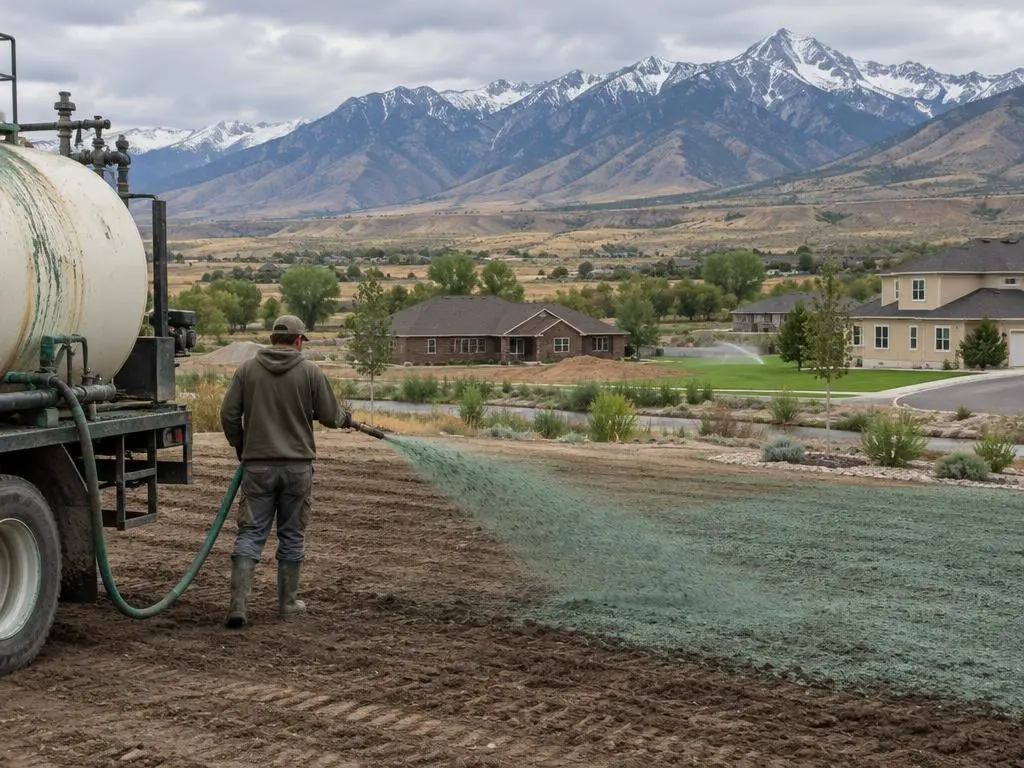
Why Choose Us for Builder & Commercial Hydroseeding
One crew, one mobilization
Seeding, hydromulch, blankets and silt fence removal handled together.
Plan-driven
Mixes, rates and timing follow your SWPPP and landscape plans.
Return visits included in scope
Touch-up seeding is written into the bid, not left as an afterthought.
Mixes for the use
Temporary, turf, reclamation and native mixes depending on what the ground becomes.
Builder & Commercial Hydroseeding Questions
What do hydroseeding contractors need from a builder?
Final grade, irrigation in where turf is planned, a water source or hydrant meter, access for a truck, and the landscape and stormwater plans so the mix and rate match the specs.
Can you seed a basin that holds water?
Yes. Basin floors and side slopes get mixes that tolerate both wet spells and dry summers, and the side slopes usually get extra mulch or blankets.
Do you provide temporary seeding?
Yes. Lots or phases that will sit for months can get quick-establishing temporary cover with mulch to hold soil until building starts.
How is large-area hydroseeding priced?
Usually by the acre or square foot, with separate lines for slopes, heavier mulch or bonded fiber matrix, and touch-up. Published guides range from about $2,000 to $8,700 per acre; your bid sets the price.
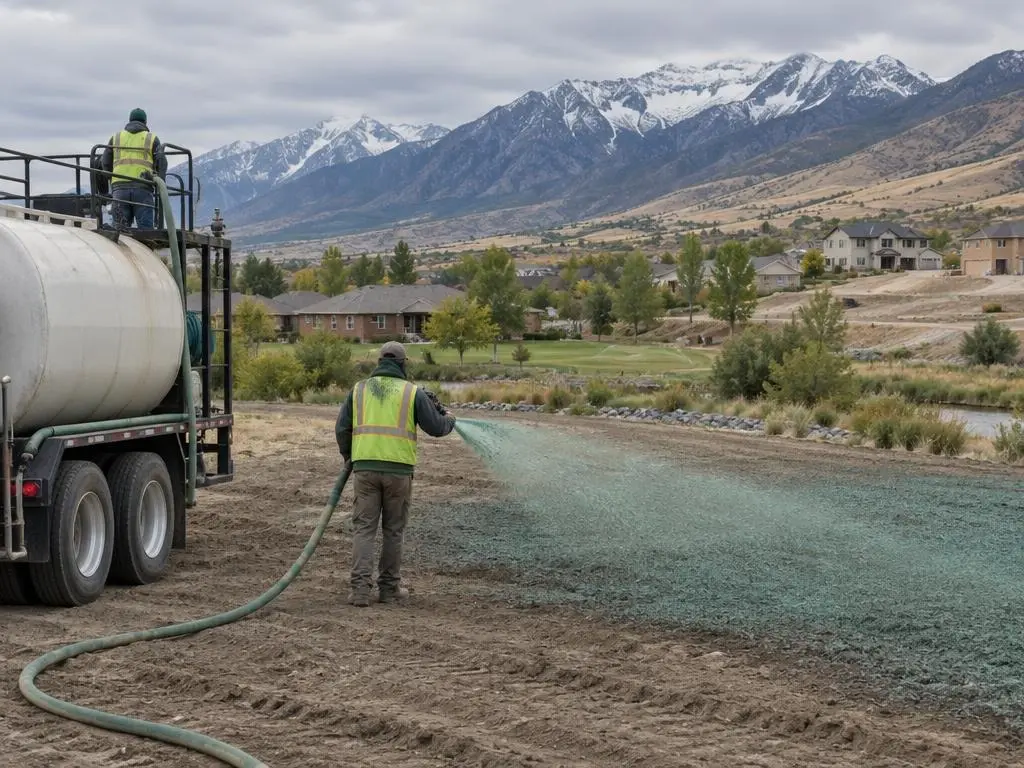
Builder & Commercial Hydroseeding Service Areas
- Hydroseeding in Salt Lake City, UT
- Hydroseeding in Herriman, UT
- Hydroseeding in South Jordan, UT
- Hydroseeding in West Jordan, UT
- Hydroseeding in Riverton, UT
- Hydroseeding in Bluffdale, UT
- Hydroseeding in Draper, UT
- Hydroseeding in Sandy, UT
- Hydroseeding in Cottonwood Heights, UT
- Hydroseeding in Holladay, UT
- Hydroseeding in Millcreek, UT
- Hydroseeding in Murray, UT
- Hydroseeding in Midvale, UT
- Hydroseeding in Taylorsville, UT
- Hydroseeding in West Valley City, UT
- Hydroseeding in Kearns, UT
- Hydroseeding in Magna, UT
- Hydroseeding in Tooele, UT
- Hydroseeding in Stansbury Park, UT
- Hydroseeding in Bountiful, UT
- Hydroseeding in Farmington, UT
- Hydroseeding in Centerville, UT
- Hydroseeding in North Salt Lake, UT
- Hydroseeding in South Salt Lake, UT
Get a Builder & Commercial Hydroseeding Estimate
Bids from plans or a site walk anywhere in the Salt Lake Valley.