
Seed and soil work for the Salt Lake Valley
Hydroseeding in Salt Lake City, UT
New lawns, slope cover and sediment control, timed to the valley's spring and late-summer seeding windows.
- Free site visits with a written estimate
- Seed mixes chosen for your soil, sun and water
- Seeding scheduled around Salt Lake's spring and late-summer windows
Seeding an Old Lakebed
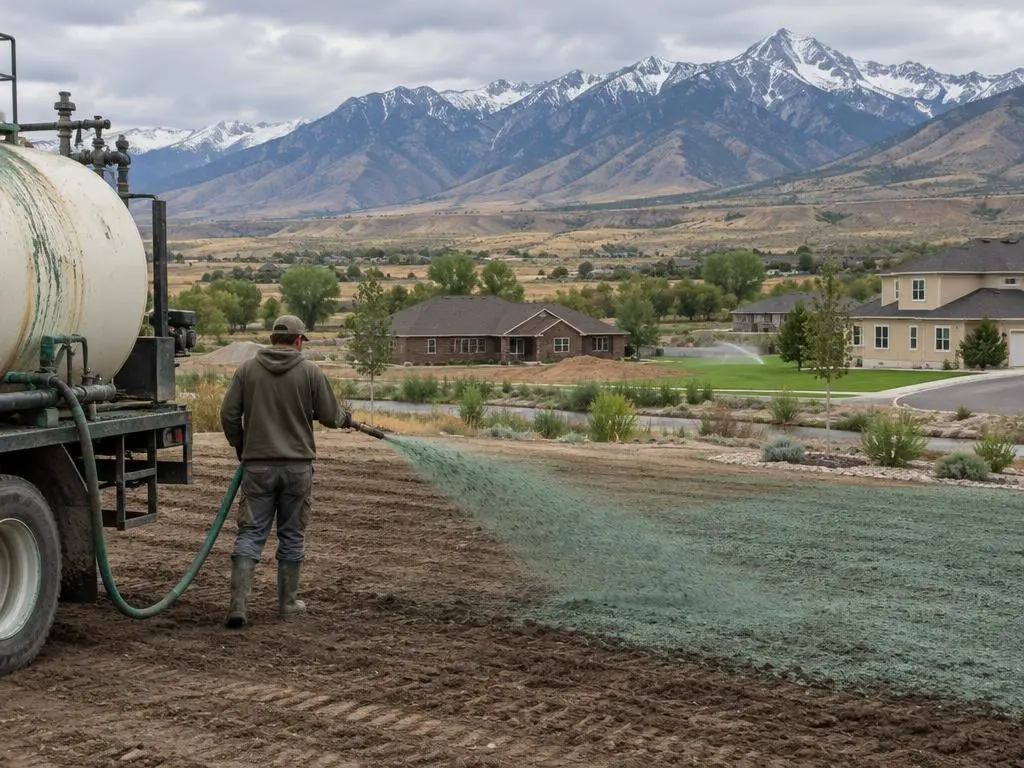
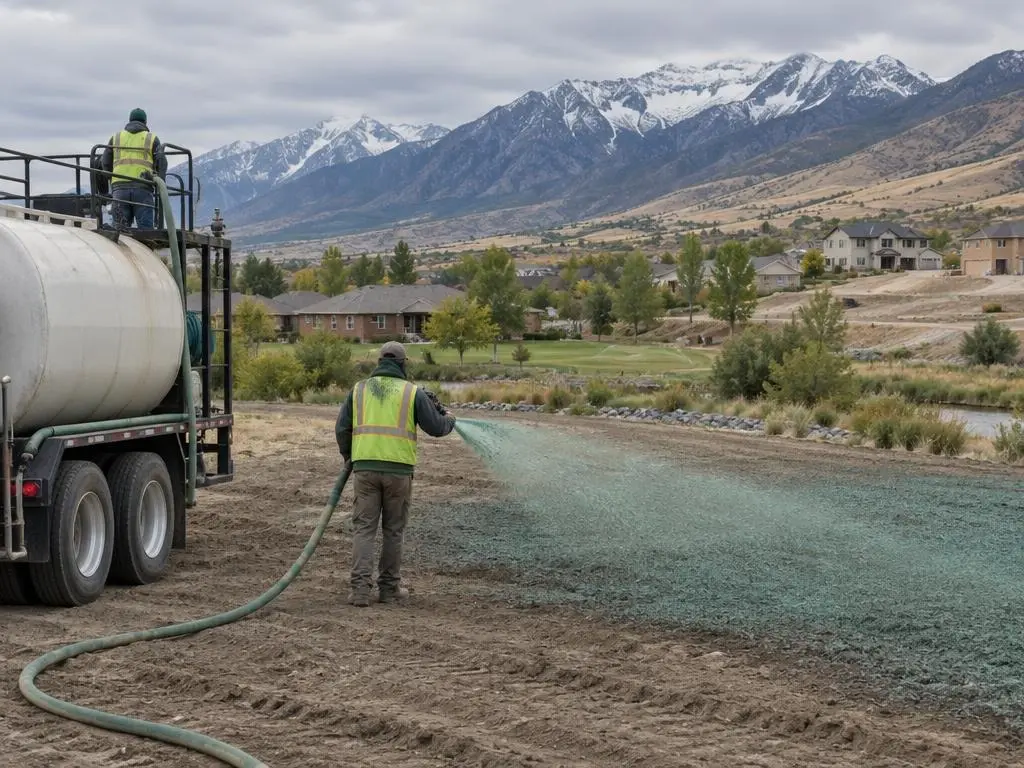
Hydroseeding in Salt Lake City starts with the dirt you have. Most of the valley floor is the old bed of Lake Bonneville, and its former shorelines still show as terraces on the benches along the Wasatch and Oquirrh foothills. Our trucks mix seed, fertilizer, wood fiber mulch and a tackifier into one wet slurry and spray it over prepared soil, so the seed stays put and holds moisture while it sprouts. Homeowners use it for new lawns and lawn renovation; builders and property managers use it to close out graded lots, slopes and common areas.
A dry summer and a wet spring
According to the 1991 to 2020 normals for Salt Lake City International Airport, the city gets about 15.52 inches of precipitation a year. April is the wettest month at about 2.16 inches, while July averages 0.49 inches and August 0.58 inches. The average July high is about 94 degrees. Most of the year's moisture arrives with Pacific storms between October and May, and late-summer monsoon thunderstorms are scattered and hit some neighborhoods while missing others.
For seeding, that means two things. New seed cannot count on rain from June through August, so sprinklers or a temporary irrigation plan are part of every lawn job. And bare soil left open through spring is exposed to the heaviest rain of the year, which is when graded lots and slopes shed the most sediment.
When to seed in the Salt Lake Valley
Utah State University Extension's northern Utah turfgrass calendar marks April and May, then August and September, as the seeding months for cool-season grasses like Kentucky bluegrass and the fescues. Extension calls late summer the optimum time, because the soil is warm enough for fast germination, weeds are less active, and the young grass gets the cool fall and the following spring to root in before July heat returns. Extension also advises allowing four to six weeks before the expected first frost. Warm-season grasses such as buffalograss and blue grama are seeded in late spring and early summer instead.
We book most residential lawns into those two windows. Erosion control on construction sites is different: it goes down when the grading is finished, because covered soil beats bare soil in any month.
Salt, crust and compaction
USU Extension points out that in many parts of Utah, high salt levels in the soil limit the growth of some turfgrasses, especially Kentucky bluegrass, and that the white crust seen in many areas of the state is soluble salt. Its tables rate bluegrass as tolerating less salt than tall fescue or perennial ryegrass. Extension recommends a soil test from a certified lab before choosing a grass. When we see crusting, poor drainage or a lot built on fill, we suggest a test first, then adjust the seed mix or the soil prep to fit.
New-construction yards add compaction. Equipment rolls the subgrade hard, and seed sprayed on that surface sprouts but cannot root deeply. We loosen the top few inches, spread topsoil where it is thin, and fine grade with a fall that carries runoff off the foundation before any slurry goes down.
Sod vs hydroseed vs dry seed
Sod gives an instant lawn and, per USU, can be laid almost any time water is available, but it costs the most. HomeGuide's figures show sod at $1 to $4 a square foot installed and hydroseeding at $0.12 to $0.35. Dry broadcast seeding is the cheapest of the three, yet seed sitting loose on the surface dries out, washes off slopes, and is picked over by birds. University of Nebraska Extension describes hydroseeding as costing a little more than dry seeding and generally less than sod, with grass often visible in 5 to 7 days, where dry seed tends to need two to three weeks.
For most Salt Lake yards over a few thousand square feet, a hydroseed lawn is the middle path: lower cost than sod, better coverage and protection than dry seed, and the freedom to pick a seed mix for your soil and water budget rather than whatever the sod farm grew.
Stormwater, slopes and sediment
Under the EPA's construction stormwater rules, a Clean Water Act permit and sediment controls apply once a project disturbs one acre, and also to a smaller piece of a bigger development that will reach that size. On the ground that means a row of silt fence below the work, protected storm drain inlets, and bare soil stabilized once grading wraps up. The Jordan River runs through the city on its way from Utah Lake to the Great Salt Lake, and the creeks that come out of the Wasatch canyons carry whatever washes off a job site downstream.
Our erosion control services cover that work from start to finish: silt fence installation and inlet protection while the site is active, then hydromulch, bonded fiber matrix or straw and coir erosion control blankets on slopes, swales and basins, followed by final hydroseeding.
Water-wise cover
The city sits in a semi-arid valley, and sustained drought in Utah has strained water supplies and dropped the Great Salt Lake to record lows. Not every square foot needs to be bluegrass. On back slopes, park strips, drainage areas and acreage that will not be irrigated, a native grass or wildflower mix can hold soil and control dust with far less water once it is established. We often seed a lawn near the house and a native mix on the rest of the lot in the same visit. Utah State University Extension's northern Utah calendar also notes that irrigation is typically needed to keep turf healthy here, peaking at about once every two days in July, so every square foot of lawn carries a summer water commitment worth weighing up front.
What a job looks like
We visit, measure, and look at grade, soil and water. You get a written estimate with prep, seed, mulch and any erosion or sediment work listed separately. On seeding day we finish the grade, spray the slurry in overlapping passes, and walk you through watering. According to HomeGuide, a new hydroseeded lawn generally takes four to six weeks before it can be mowed, and we tell you what to watch for until then. Get a free estimate
From the Benches to the West Side
Our base is Salt Lake City, and we work across Salt Lake County and into Davis and Tooele counties. On the east bench, Millcreek, Holladay, Cottonwood Heights and Sandy have older lawns under mature trees and yards that climb toward the canyons. Murray, Midvale, South Salt Lake, Taylorsville and West Valley City sit on flatter ground near the Jordan River, where we see lawn renovation, redevelopment sites and salty or poorly drained soil. Growth is fastest to the south and west: Draper, South Jordan, West Jordan, Riverton, Herriman and Bluffdale keep adding subdivisions that need new lawns, silt fence and final stabilization, as do Kearns and Magna below the Oquirrhs. North of the city, Bountiful, Centerville, Farmington and North Salt Lake have steep hillside lots, and over the mountains Tooele and Stansbury Park have their own snow, water and growth issues. Open any town below for the soil, slope and stormwater details that apply there.
- Hydroseeding in Salt Lake City, UT
- Hydroseeding in Herriman, UT
- Hydroseeding in South Jordan, UT
- Hydroseeding in West Jordan, UT
- Hydroseeding in Riverton, UT
- Hydroseeding in Bluffdale, UT
- Hydroseeding in Draper, UT
- Hydroseeding in Sandy, UT
- Hydroseeding in Cottonwood Heights, UT
- Hydroseeding in Holladay, UT
- Hydroseeding in Millcreek, UT
- Hydroseeding in Murray, UT
- Hydroseeding in Midvale, UT
- Hydroseeding in Taylorsville, UT
- Hydroseeding in West Valley City, UT
- Hydroseeding in Kearns, UT
- Hydroseeding in Magna, UT
- Hydroseeding in Tooele, UT
- Hydroseeding in Stansbury Park, UT
- Hydroseeding in Bountiful, UT
- Hydroseeding in Farmington, UT
- Hydroseeding in Centerville, UT
- Hydroseeding in North Salt Lake, UT
- Hydroseeding in South Salt Lake, UT
Why Homeowners Call Hydroseeding Salt Lake City
Seeding windows, not guesses
Cool-season lawns go down in the spring and late-summer periods Utah State University Extension recommends for northern Utah, with time to root in before frost or July heat.
Soil before seed
We look for salt crust, compaction and thin topsoil, and suggest a soil test when the ground calls for one, so the mix fits the site.
Erosion and seed from one crew
Silt fence, inlet protection, blankets, hydromulch and final seeding are planned together instead of by three different outfits.
Line-item written estimates
Grading, topsoil, seed mix, mulch, tackifier and erosion controls are broken out one by one, so no cost is buried in a lump sum.
Common Questions
Is hydroseeding worth the money?
For most lawns over a few thousand square feet, yes. HomeGuide prices hydroseeding from $0.12 up to $0.35 per square foot, compared with $1 to $4 for sod, and the mulch layer protects seed far better than dry broadcasting. The tradeoff is time: you water for several weeks and wait about four to six weeks for the first mow instead of walking on sod the next day.
Can I water a new lawn in Utah during summer?
New seed has to be kept moist, and in a Salt Lake July with less than half an inch of normal rain, that means sprinklers several times a day until it is up. Check your city or water provider for any watering rules that apply to your address before you plan a summer seeding. Where water is tight, we steer customers toward the spring and late-summer windows and toward lower-water mixes.
What is the most drought-tolerant grass in Utah?
There is no one answer for every yard. Kentucky bluegrass is common but needs regular water and tolerates less salt than tall fescue or perennial ryegrass, per USU Extension. Buffalograss and blue grama are warm-season grasses seeded in late spring, and native mixes suit areas that will not be watered all summer. We match the mix to how much water you plan to use.
Which months work for hydroseeding a Salt Lake City lawn?
USU Extension's northern Utah calendar marks April and May, and August and September, for cool-season seeding, and calls late summer the optimum, at least four to six weeks before the first frost. Warm-season and some native grasses go in during late spring and early summer. Erosion control on a graded site goes down as soon as grading is finished.
How long until a hydroseeded lawn comes up?
With steady moisture, HomeGuide and University of Nebraska Extension both expect the first green in 5 to 7 days, though Angi says 7 to 14 days is common. Cool soil in early spring slows it down. The first mow typically comes four to six weeks after seeding.
Do I need sprinklers before you hydroseed?
For a lawn, yes, or at least a reliable way to water every part of the area several times a day for the first weeks. We prefer the sprinkler system to be installed and tested before final grading. Slopes and native areas that will not be irrigated are seeded with mixes and mulch meant to wait for natural moisture.
Can you hydroseed over salty or alkaline soil?
Often, after the soil is tested. USU Extension says salts can be leached out of soils that drain well using good-quality water, and that sodium problems may call for gypsum or sulfur. Choosing a more salt-tolerant grass, such as tall fescue or perennial ryegrass instead of straight bluegrass, also helps.
Do you do erosion control for builders?
Yes. Silt fence and inlet protection go in when the job opens, and hydromulch, blankets and final seeding go down when it closes. Sites disturbing an acre or more, or smaller pieces of a bigger development that will reach that size, fall under construction stormwater permit rules, and our work follows the site's plan.
Our Services
Six kinds of seeding, soil and erosion work for homeowners, builders and property managers around the valley.
New Lawn Hydroseeding
Hydroseed lawns for new homes, rebuilt yards and tired grass, with the soil prep done first.
Learn more →Builder & Commercial Hydroseeding
Large-area seeding and final stabilization for builders, developers, HOAs and public sites.
Learn more →Slope & Erosion Control
Holding Wasatch foothill cuts, swales and channels with hydromulch, bonded fiber matrix and rolled blankets.
Learn more →Silt Fence & Sediment Control
Silt fence installation, inlet protection and sediment controls that keep dirt on the job site.
Learn more →Grading, Topsoil & Dirt Work
Yard grading, fine grading and topsoil so seed lands on a smooth bed that drains away from the house.
Learn more →Native & Wildflower Seeding
Low-water native grass and wildflower cover for slopes, open space, acreage and park strips.
Learn more →Bring Bare Ground Back to Green
Free site visits across Salt Lake City and the valley, with a written estimate.